
4 Design Tricks That Make Any Room Feel More Put Together
Why should you listen to my perspective on interior design? For nearly 20 years, I worked in the design industry, beginning as a drapery seamstress for my friend. I eventually opened my own shop. Over the years, I helped clients bring their rooms together through thoughtfully chosen fabrics, colors, and accessories. My approach was to offer gentle guidance to help people recognize their own style, make confident choices, and create spaces that feel both beautiful and personal.
A beautiful room is rarely the result of costly purchases. I am not denying that it is great fun to shop for those special pieces. But often, how a room feels comes down to how your space guides your eye around the room with colors, patterns, and lighting. And that’s good news because we can make your home look great without breaking the bank.
Start improving your space with these four simple design shifts.
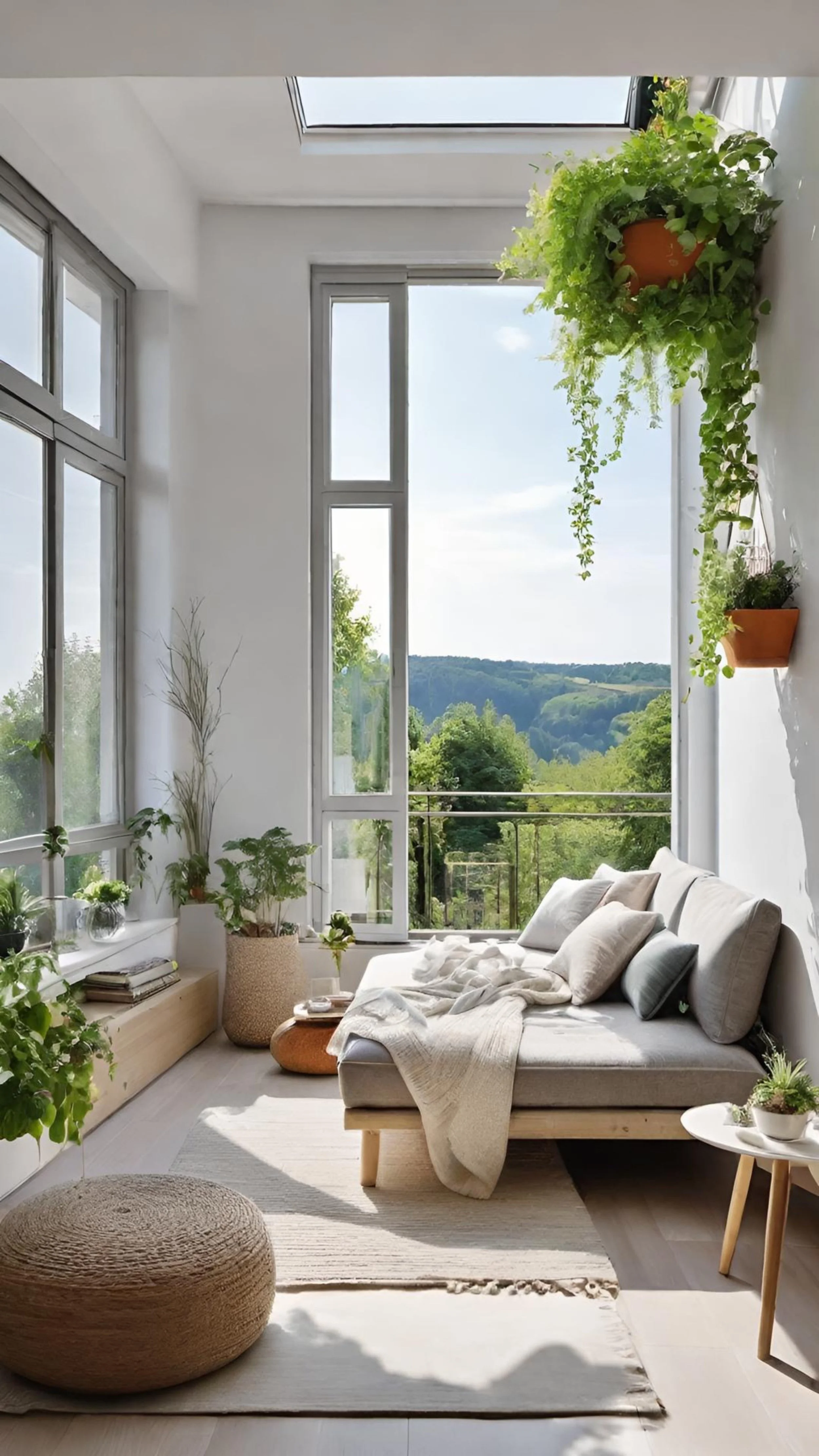
Image by Gregor Quendel from Pixabay
1. Create Depth by Designing Beyond the Floor
A room can contain stylish furniture and still feel flat. The usual culprit is a layout concentrated in one low horizontal band: sofa, coffee table, console, and bed all sit at roughly the same visual height.
To make the space feel larger and more dimensional, give the eye reasons to move upward, downward, forward, and back. Treat the room as a layered composition rather than a row of objects placed against the walls.
Try creating depth with these simple tips:
· Raise the curtains. In my business, I often mounted the curtain rod close to the ceiling and let the fabric fall to the floor. The longer vertical line visually draws the eye up and down, creating the illusion of height and more space.
· Add tall elements. Another way to draw the eye upward is by adding a tall bookcase, floor lamp, paneling detail, large plant, or vertical artwork.
· Float key furniture. Pull the sofa away from the wall even a few inches to create a shadow line. This adds another layer to the space and makes the piece feel more three-dimensional. Light and shadow are a great way to create depth in a room.
· Build layers by creating a foreground, middle ground, and background. For example, by pairing wall art and curtains with a sofa, then adding a coffee table or bench in front, the area becomes more of a vignette. By layering items from back to front—like your wall art, sofa, and coffee table—you create a rich, cohesive visual story instead of just a random cluster of furniture.
· Vary heights. Mix low bowls, medium lamps, and taller branches or plants so the room does not visually settle near the floor.
Quick takeaway: A room feels spacious when your eye naturally travels around it using height and depth as its guide.
2. Replace Flat Light with Layers
One bright ceiling fixture may illuminate a room, but it only washes out texture and makes everything look flat. Better interiors use several light sources at different heights, angles, and intensities. A layered plan combines ambient, task, and accent lighting to create depth, function, and focus.
The three essential lighting layers
· Ambient light: The room’s soft, general glow.
· Task light: Focused illumination for reading, cooking, working, or grooming.
· Accent light: Directional light that highlights artwork, architectural details, plants, or textured surfaces.
Directional light is especially valuable because it creates highlights and shadows. Those changes in brightness reveal shape, texture, and distance.
Easy lighting upgrades:
· Place a floor lamp beside a chair instead of relying only on the ceiling fixture.
· Use sconces beside a bed to bring out the texture of a headboard.
· Angle light across stone, wood grain, plaster, or fluted panels.
· Add a small lamp to a dark corner so the room feels deeper and more balanced.
· Use dimmers to shift between practical brightness and a softer evening mood.
Quick takeaway: Do not aim for equal brightness everywhere. A thoughtful mix of glow, focus, and shadow gives a room dimension.
3. Style Surfaces with Rhythm, Not Perfect Symmetry
If a shelf or console looks stiff, the problem may not be the objects themselves. It may be the way they are grouped. Pairs and perfectly mirrored arrangements feel orderly, but they can also stop the eye too quickly.
Create odd-numbered arrangements to make a more relaxed visual rhythm. Use pieces that differ in height, shape, and scale. The goal is not to add a random third object. Instead, create a small composition with a clear hierarchy.
Use the tall-medium-low formula:
· Tall: A vase, lamp, branch, candlestick, or sculpture.
· Medium: A ceramic vessel, framed photograph, box, or decorative object.
· Low: A tray, bowl, or short stack of books that anchors the arrangement.
Keep the pieces close enough to create one group with a little overlap. On a longer surface, expand to five or seven objects—but divide them into smaller clusters with open space between them.
A simple console-table recipe:
· Anchor one side with a substantial lamp.
· Build the center with books and a shallow bowl.
· Balance the opposite side with a rounded vessel and a taller sculptural piece.
· Leave intentionally empty areas so the arrangement can breathe.
Quick takeaway: Great styling is not about filling every inch. It is about creating a visual path for your eyes to follow and knowing where to pause.
4. Leave Room for Personality
A coordinated room feels like a showroom, not a home. It lacks personality- your personality. When every item is new, matching, and trend-driven, the space looks too polished and does not reflect who lives there.
The cure is not more clutter. It is carefully chosen and meaningful pieces of contrast: a worn antique chair beside a clean-lined sofa, handmade pottery on a sleek shelf, or an inherited chest beneath contemporary art. These unexpected combinations give a room history and personality, making it memorable.
Use an 80/20 approach:
· Let 80% provide the structure of the room. Keep the main palette, furniture lines, lighting, and proportions cohesive.
· Let 20% tell your story. Add vintage finds, travel keepsakes, favorite books, family pieces, handmade objects, or one wonderfully unusual item to provide interest and dimension to the space.
Questions to ask before buying more decor:
· Does this object mean something to me?
· Does it add new material, shape, age, or texture?
· Am I choosing it because I love it—or because it matches?
· Will it make the room feel more personal or simply more complete?
Using natural materials and visible craftsmanship can help, such as wood grains, aged leather, woven fibers, handmade ceramics, and small irregularities, which bring a human quality that perfectly uniform finishes often lack.
Quick takeaway: The most inviting homes balance order with evidence of real life.
Final Thoughts
You do not need a larger budget to create a more considered home. Begin by changing how the eye moves through the room, layering the light, styling with varied scale, and keeping the pieces that carry a story.
Start small this week:
· Raise the curtain rods.
· Pull one piece of furniture away from the wall.
· Add a lamp at a new height.
· Restyle one surface using tall, medium, and low objects.
· Display one meaningful item you have kept packed away.
A well-designed room shouldn't look like a magazine cover; it should feel like a pleasant place to call home. It should feel dimensional, comfortable, and unmistakably yours.
Let me know in the comments below how you made your home more comfortable.
