
Create a calmer, warmer, more comfortable space—without a stressful renovation.
Look around your living room, and you may see the beautiful evidence of a life fully lived: the sofa that survived the busy family years, the substantial wood furniture you once loved, and accessories that have occupied the same corners for decades. The room may still feel familiar and comfortable, yet it no longer feels quite like you.
Entering your fifties, sixties, or beyond often brings a desire for more than a decorating update. You may want less visual noise, fewer things to manage, and more room to breathe. You want a home that supports the calmer, more intentional chapter of life you are creating now.
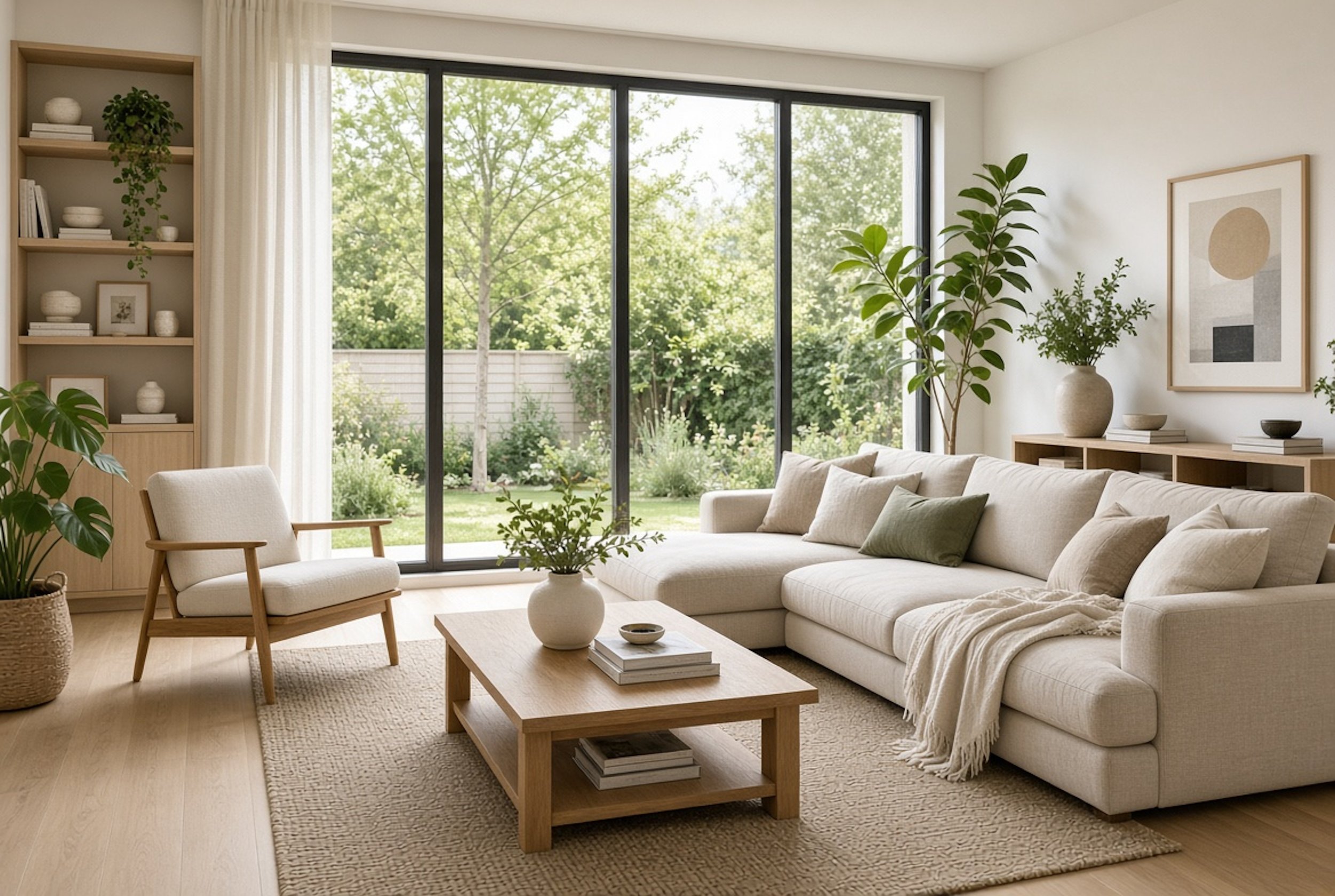
Image by Jordan Garner
That is where organic modern style shines. It pairs clean, contemporary lines with warm woods, natural materials, rounded shapes, and soft, touchable textiles. The result is serene rather than stark, elevated without feeling precious, and comfortable enough for everyday life.
Best of all, you do not need a major renovation—or an entirely new room—to make the shift. A few thoughtful edits can help your living room feel lighter, warmer, and more aligned with the life you want to live.
What Is Organic Modern Style?
Organic modern design blends the simplicity of modern interiors with the warmth and irregular beauty of nature. Instead of cool, glossy surfaces and rigid minimalism, it favors tactile materials, earthy colors, softened silhouettes, and a restrained mix of meaningful objects.
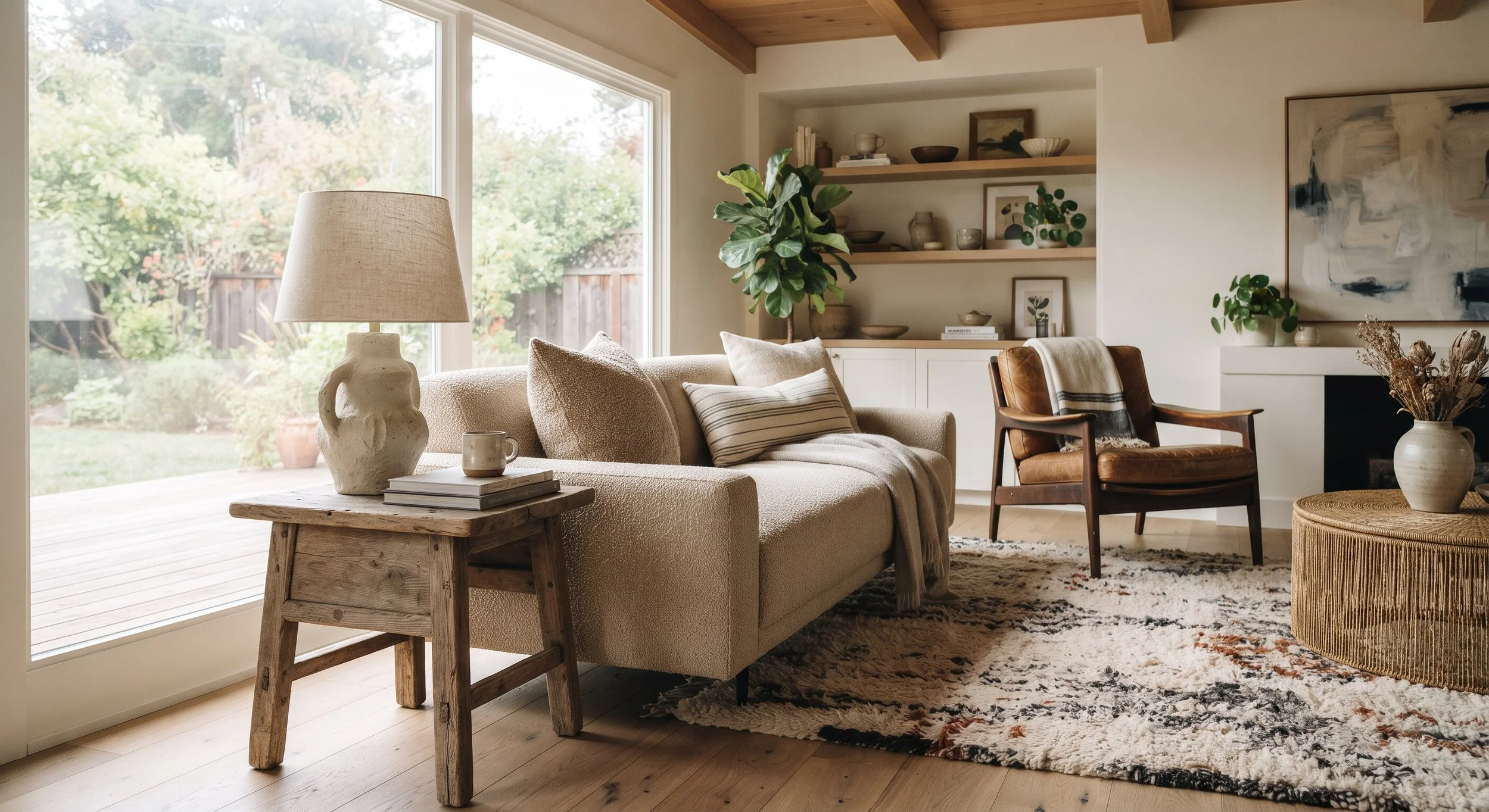
In a living room, that might mean a streamlined sofa paired with a nubby linen pillow, a sculptural ceramic lamp on an old wood table, or a contemporary rug beside a cherished vintage chair. The style works especially well when you want your home to feel current without discarding everything that gives it character.
Begin by Releasing What Feels Dated
Before you add anything new, pause and notice what makes the room feel heavy. It may be a matching furniture set that dominates the space, layers of small accessories that require constant dusting, dark window treatments, or pieces you keep only because they have always been there.
Editing a room does not mean erasing its history. It means deciding which parts of that history deserve a place in your present. Keep the heirloom table that still delights you. Display a few meaningful photographs instead of every frame you own. Donate, sell, or relocate furnishings that no longer support the way you live.
Start small if letting go feels difficult. Clear one surface, remove one unused chair, or pack away several accessories for a month. Notice whether the room feels more spacious—and whether you feel more at ease. The goal is not emptiness; it is breathing room.
Choose a Warm, Restful Color Palette
Organic modern living rooms begin with warm, nature-inspired neutrals. Think creamy white, oatmeal, soft mushroom, warm taupe, muted clay, and gentle shades of brown. These colors soften a room while giving it a fresh, current feeling.
You do not have to repaint every wall. Begin with the easiest layers: pillow covers, throws, lampshades, curtains, or a rug. If your walls are cool gray or bright white, warmer textiles and natural wood can balance them beautifully.
Limit your main palette to three or four related tones, then add one restrained accent such as sage, rust, charcoal, or deep olive. A focused color story gives the eye a place to rest and allows beloved objects to stand out.
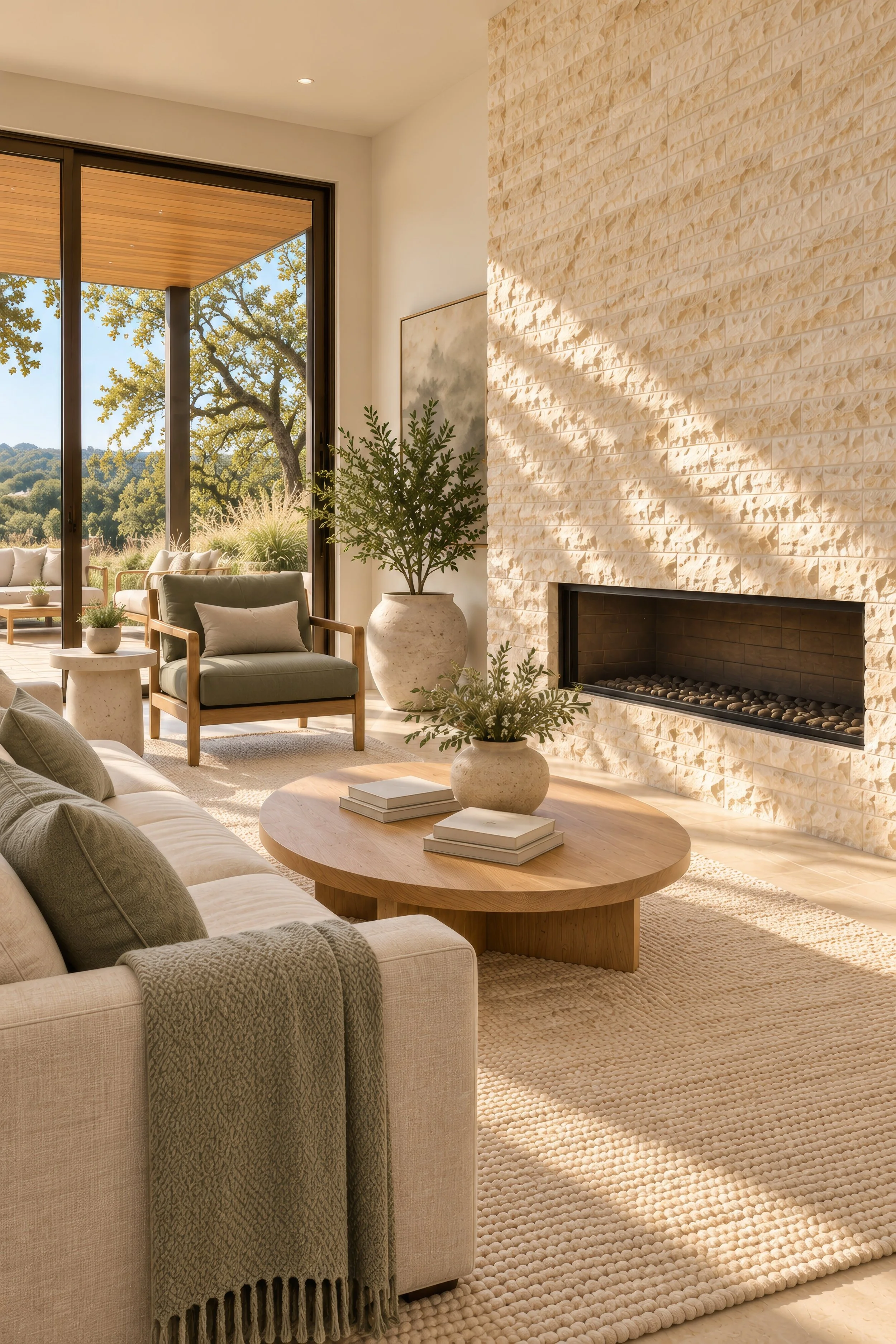
Image by Cornelia Brown
Layer Natural Materials and Touchable Texture
A calm room should never feel flat. Organic modern style comes alive through contrast: smooth ceramic beside nubby linen, woven fiber against polished wood, or a plush rug beneath a streamlined coffee table.
Look for materials that age gracefully and feel good in everyday life—wood, stone, linen, cotton, wool, jute, rattan, and matte pottery. You do not need all of them. Repeating two or three materials throughout the room will create a more collected, cohesive look.
Comfort matters, especially in a room designed for reading, conversation, and rest. Choose upholstery that invites you to sit down. Keep a substantial throw within reach. If a beautiful piece feels fragile, scratchy, or difficult to maintain, it may not belong in the simple home you are creating.
Soften the Room with Curves
Many traditional living rooms contain strong rectangles: boxy sofas, square end tables, rigid bookcases, and straight architectural lines. Rounded shapes soften that visual weight and make a space feel more welcoming.
You do not need to replace your largest furniture. Introduce curves through an accent chair, a round side table, an oval mirror, a globe-shaped lamp, or a softly sculpted vase. Even a round tray on a rectangular coffee table can create balance.
When you do replace a major piece, prioritize ease as much as appearance. Check the seat height, back support, cushion depth, and how easily you can stand. A beautiful room should look elegant, but it should also serve your body well.
Bring Nature Indoors—Simply
Nature provides the quiet focal points that make this style feel grounded. A leafy plant, a bowl of smooth stones, a piece of driftwood, or tall branches in a ceramic vessel can add life without adding clutter.
Scale is more important than quantity. One generous arrangement often looks calmer and more intentional than several small objects scattered around the room. Try a large vase on the mantel, a substantial plant near a window, or a low wooden bowl on the coffee table.
If caring for plants is not your strength, use clipped branches, dried grasses, or a single convincing faux stem. The purpose is to introduce organic shape and texture—not another demanding chore.
Four Organic Modern Living Room Updates You Can Make This Weekend
1. Create Calm Underfoot
If your rug is too small, strongly patterned, or worn beyond repair, consider replacing it with a larger woven rug in a warm neutral. Ideally, the front legs of your main seating pieces should rest on it. This visually connects the furniture and makes the room feel more generous.
2. Layer the Lighting
Harsh overhead light can make even a beautiful room feel uninviting. Add two or three pools of light at different heights with table and floor lamps. Ceramic or wood bases and linen shades contribute texture, while warm-toned bulbs create a softer evening glow.
3. Refresh the Textiles
Replace a busy collection of pillows with a smaller mix in linen, cotton, wool, or bouclé. Combine one subtle pattern with solid colors, and vary the textures rather than adding more hues. Drape a soft throw over the sofa or a basket so comfort is always close at hand.
4. Style One Simple Focal Point
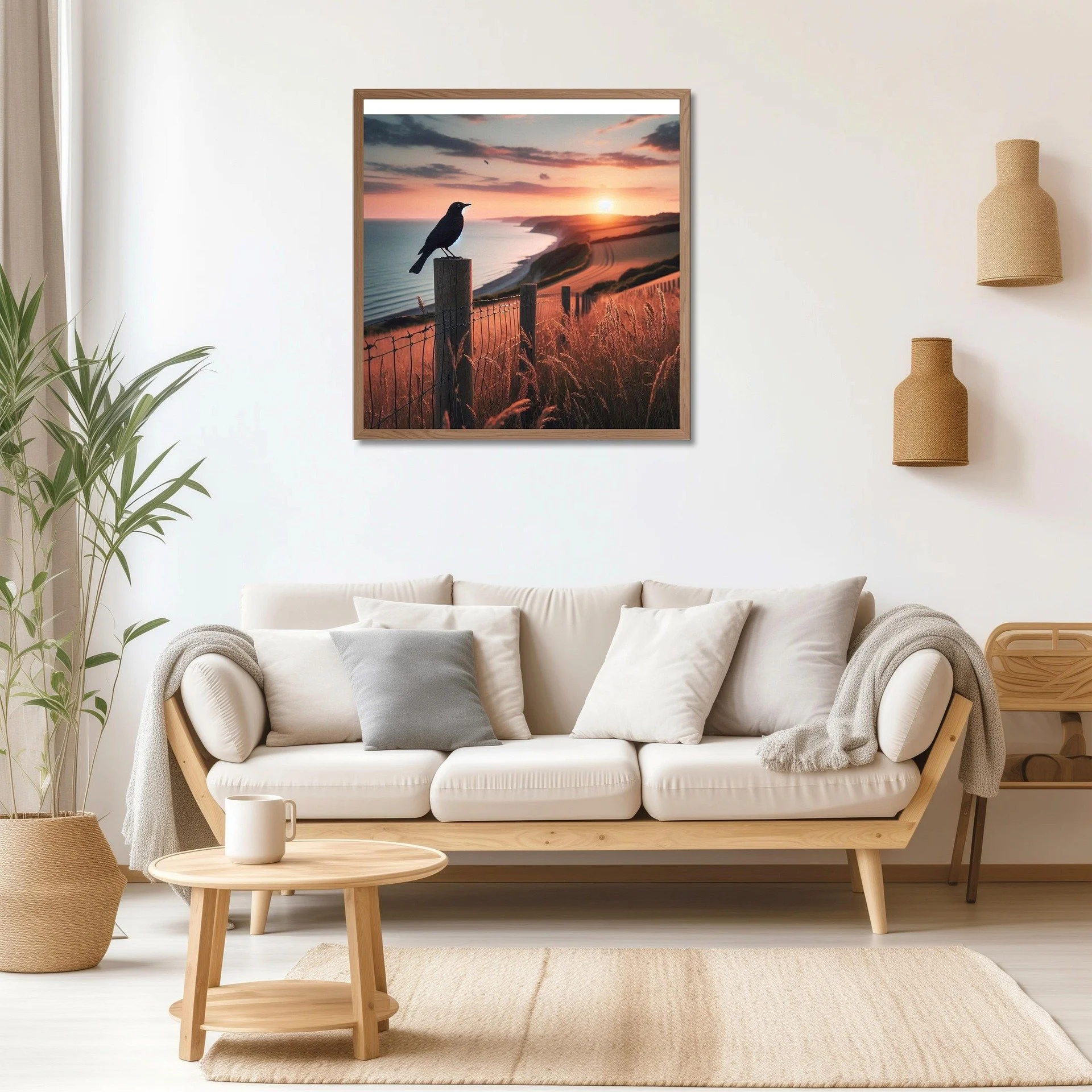
Choose the coffee table, mantel, or console—not all three—and create one restrained arrangement. Try a ceramic vessel with branches, a small stack of books, and a wooden or stone object. Leave open space around the grouping so every piece has room to be seen.
Work with What You Already Have
An organic modern living room is not created through constant shopping. Before buying anything, move pieces between rooms, remove excess accessories, uncover a wood surface, or change the placement of your lamps. An older chair may feel entirely new beside a modern floor lamp and a textured pillow.
When you do purchase something, choose slowly. Ask whether it is useful, comfortable, well made, and compatible with several things you already own. Organic modern style is most convincing when it feels collected over time—not delivered in one afternoon.
A thoughtful room can include vintage furniture, family treasures, and signs of ordinary life. Perfection is not the goal. Harmony is.
A Beautiful Next Chapter Begins at Home
Your living room does not need to reflect every version of who you have been. It can support who you are becoming: someone who values peace, beauty, comfort, and the freedom of having less to manage.
The most meaningful transformation may begin with one small choice—a cleared tabletop, a softer lamp, a natural rug, or the decision to release a piece that no longer belongs. Let each change make the room feel lighter and more like you.
You are not decorating for a showroom. You are creating a sanctuary for morning coffee, meaningful conversations, quiet evenings, and the life unfolding now.
Before bringing in any new organic textures, the most freeing first step is clearing out what no longer serves you—if you're ready to start fresh, take a look at The Gentle 5-Step Guide to Decluttering Without Overwhelm, or explore How Decluttering Changes You: Real Emotional Results From Real People to understand how clutter can shift your mood.
What is one simple change you will make in your living room this week? Share it in the comments—I would love to hear what you are creating.
